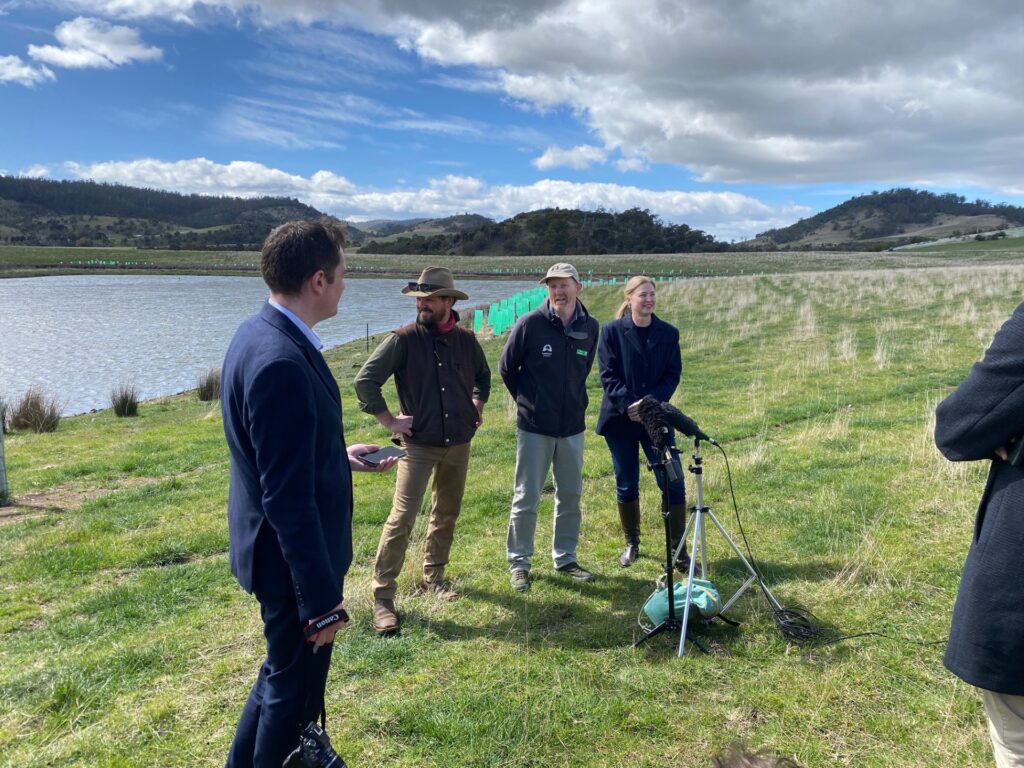
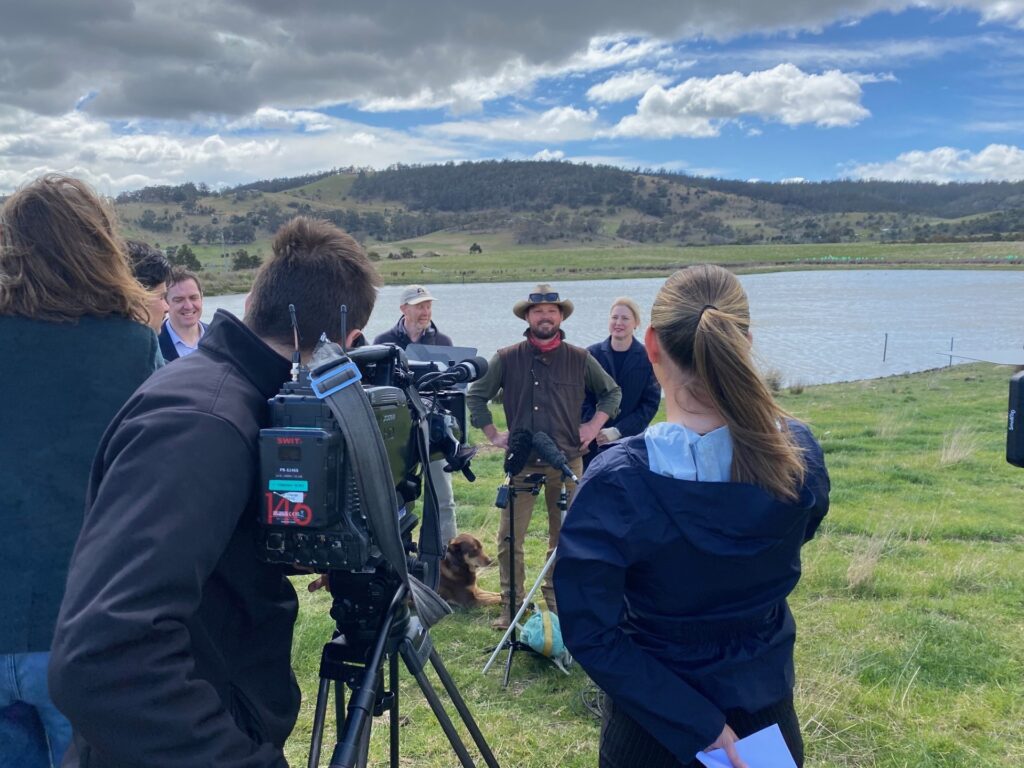
At a Coal Valley farm, Landcare Tasmania in partnership with the Australian Government, has launched the Catchment Connect Project to strengthen farm and landscape resilience.
The $4 million, five-year Catchment Connect Project, funded through the Future Drought Fund, is designed to enhance farm dam infrastructure, improve water quality, and support biodiversity. Through spatial mapping, on-ground works, and community engagement, it offers scalable solutions for climate adaptation and sustainable farming.
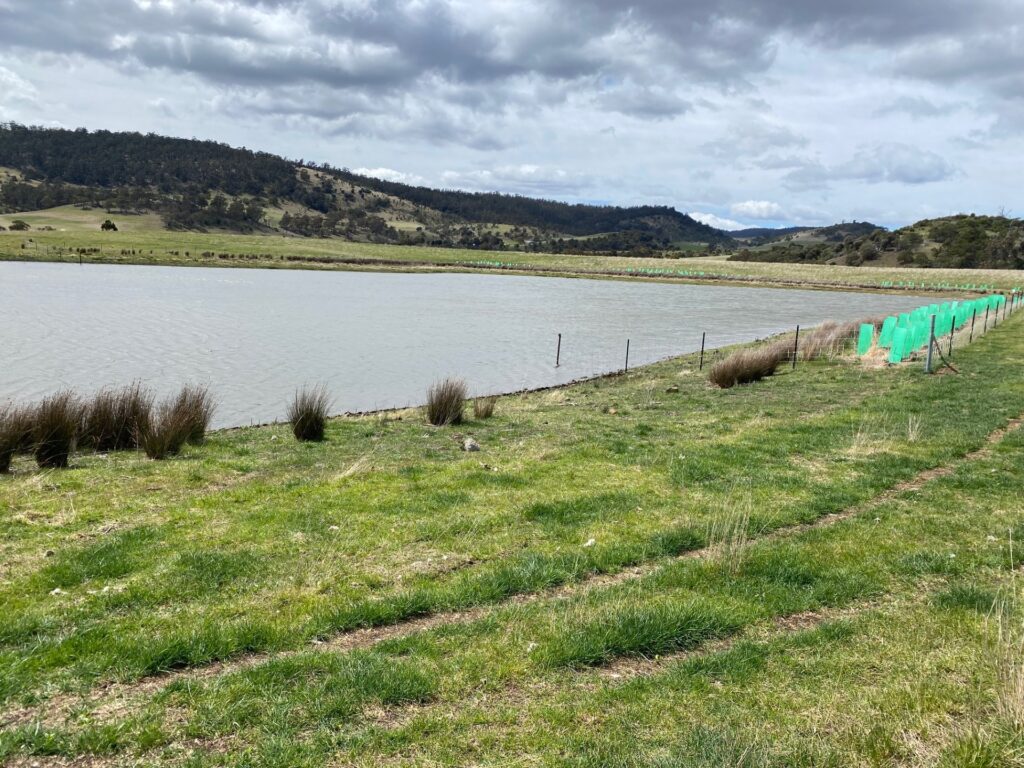
At the launch event, CRPA member Lachlan van Balen showed how fencing, revegetation, and native vegetation buffers are already making a difference on Logie Farm. These practical interventions are helping farmers retain water during dry periods, reduce emissions, and protect vital riparian zones.
Agricultural Minister and Franklin Federal MP Julie Collins, who was present at the launch, said the funding delivered to Landcare Tasmania was part of the government’s more than $2 billion worth of investments to help farmers prepare for climate change challenges.
“Water management is a key part of drought resilience across Tasmania, which is why I’m so pleased to be launching this project,” Ms Collins said.
“Dam management in particular can play a significant role in reducing emissions, particularly methane, from the water.
“Most importantly, this is another means of restoring and regenerating the land.”
Lachlan said having enough stock feed for the property’s 500 breeding ewes was his biggest concern leading into the warmer months and dam levels were crucial to that.
“The water in the Coal River Valley has the most extreme differences in dam levels I’ve ever seen in my life,” Mr Van Balen said.
“I’ve spent time in the Northern Territory, New South Wales and Queensland – all over the place – and this is the most extreme fluctuations I’ve seen in weather conditions anywhere.”
“We like to grass finish our animals where we can or finish with improved pastures.
“The drier it is, the less grass we have and the harder it is to finish lambs.”
The dam at Logie Farm was also prone to water evaporation.
“Also, because there’s so much area around the bank, it’s susceptible to lots of compaction from stock grazing around the edges,” Mr Van Balen said.
“We’ve eliminated that by fencing it off and having a couple of strategic stock access points which allow enough sheep to get in a drink abreast if they’re really thirsty.”
CRPA is a Landcare member and CRPA members can apply to be a part of the Catchment Connect Project through the association’s portal access.